
Most people assume muscle loss is something that happens to the elderly. It is not. The decline begins in your thirties, it is measurable long before it is visible, and by the time you notice it in the mirror you have usually been losing ground for two decades.
The clinical name for it is sarcopenia, and it is one of the most reliable predictors of how well you will live in your seventies and eighties. It is also, unlike most things that go wrong with age, almost entirely reversible.
What sarcopenia actually is
Sarcopenia is the progressive loss of skeletal muscle mass, strength and function that comes with ageing. Research consistently places the onset in the third decade of life, with adults losing roughly three to eight percent of their muscle mass per decade from around age thirty. After sixty, the rate accelerates.
Two things make this more serious than the numbers suggest.
The first is that strength falls faster than size. You can lose a meaningful amount of functional strength while your body weight stays exactly the same, because muscle is being quietly replaced by fat. The scale says nothing has changed. Your body says otherwise.
The second is that the loss is not evenly distributed. It hits the fast-twitch fibres hardest, which are the fibres responsible for power, reaction and balance. That is why the first real-world sign is rarely weakness in the gym. It is a stumble that you catch a fraction slower than you used to.
Why it matters more than almost any other marker
Muscle is not just there to move you around. It is the largest site of glucose disposal in the body, a reservoir of amino acids that the immune system draws on during illness, and the structure that protects your joints and skeleton under load.
When muscle mass falls, several things follow. Insulin sensitivity worsens. Bone density declines alongside it, because bone responds to the mechanical load that muscle applies. Balance and reaction speed deteriorate, which is the direct pathway to the falls and fractures that end independence for so many people in their eighties.
This is why researchers increasingly treat muscle as a longevity organ rather than an aesthetic outcome. We wrote about that shift in more depth in lifespan versus healthspan, which is the difference between the years you are alive and the years you are still fully functional.
The signs that arrive before the mirror does
Sarcopenia is easy to miss because it does not announce itself. The early markers are functional, not visual:
- Getting out of a low chair without using your hands starts to require thought
- Carrying shopping up a flight of stairs leaves you more winded than it used to
- Your grip feels less certain on jar lids, heavy bags or a loaded gym bar
- Recovery after a hard weekend takes days rather than hours
- Your weight is stable but your clothes fit differently
That last one catches people out constantly. Muscle is denser than fat, so replacing one with the other keeps the scale steady while changing your shape, your metabolism and your resilience.
Grip strength deserves a special mention here because it is the cheapest and most predictive test available. We covered why it earns that status alongside VO2 max in the two numbers that predict your future.
Why cardio alone will not stop it
This is the part that surprises committed exercisers. Running, cycling and swimming are excellent for cardiovascular health and they do good things for your VO2 max. What they do not do, on their own, is provide the mechanical load that tells your body to keep building and maintaining muscle tissue.
Muscle responds to resistance. Without progressive load, the body treats muscle as expensive tissue it does not need, and begins to shed it. Plenty of lifelong runners arrive in their fifties with excellent endurance and a measurable strength deficit.
The corollary is more encouraging. Resistance training works at any age. Studies in adults well into their eighties and nineties consistently show meaningful gains in strength and functional capacity within weeks of starting a structured programme. There is no age at which the door closes.
What actually reverses it
Progressive resistance training, two to three times a week. This is the primary intervention and nothing else comes close. The key word is progressive. The load has to increase over time, because muscle adapts to what it is given and then stops responding.
Enough protein, spread across the day. Older adults need more protein than younger adults to trigger the same muscle-building response, not less, which is the opposite of what most people assume. Distribution matters as much as total intake.
Consistency over intensity. Two sessions a week for a year beats five sessions a week for six weeks followed by nothing. Sarcopenia is a slow process and the counter to it is a durable habit, not a heroic block of training.
Measurement. If you are not tracking strength, you cannot tell the difference between maintaining and slowly declining. Both feel identical from the inside.
How threezero is built around this
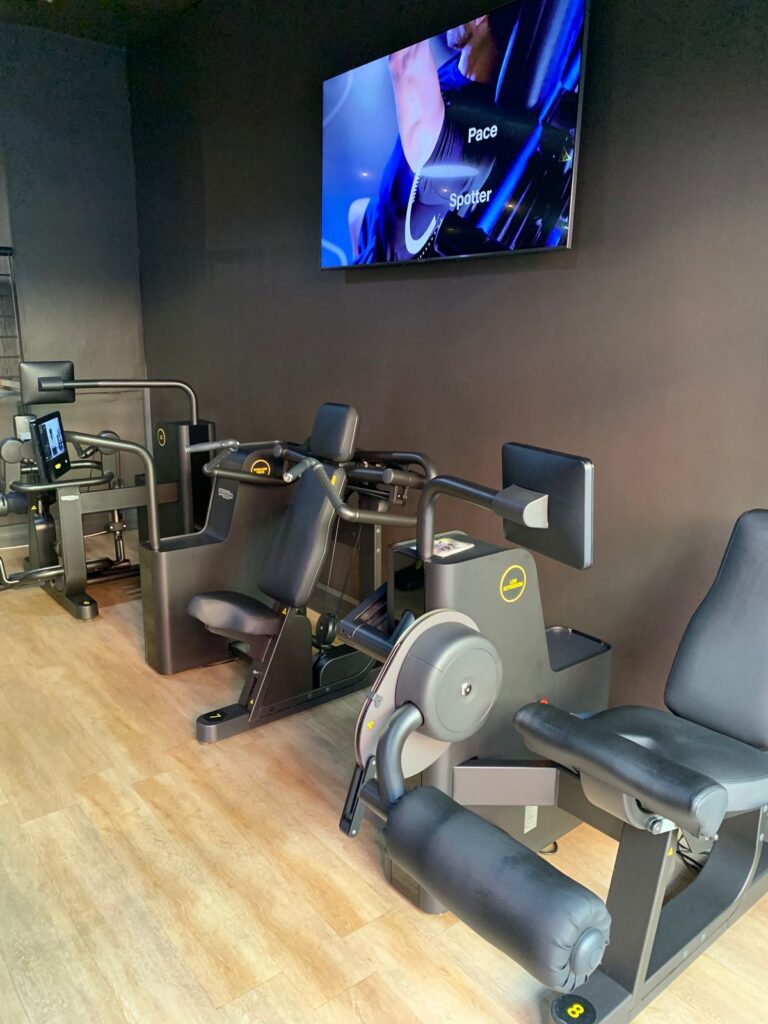
The Technogym Biocircuit at our Green Point studio is a guided strength circuit that sets the resistance for you, adjusts the machine to your body, and progresses the load automatically as you get stronger. A full session takes thirty minutes.
That design is deliberate. The barrier to resistance training for most busy professionals is not motivation, it is the friction of working out what to do, how heavy to go, and whether the progression is right. Removing that friction is what turns a good intention into a two-year habit.
Average member result. 14% increase in strength over three months.
Threezero is a Vitality Accredited Fitness centre in Cape Quarter, Green Point, which means your sessions count towards your Vitality activity goals as well.
The short version
Muscle loss starts around thirty, moves quietly, and predicts a great deal about how the second half of your life goes. It is not a cosmetic problem and it is not inevitable. Resistance training reverses it at any age, and the earlier you start the less ground you have to make up.
If you want to know where you currently stand, the most useful thing you can do is get a baseline measurement rather than an estimate.
Book a trial session at threezero Cape Quarter and see what your numbers actually say.


