
If you could measure just two things about your body to get a rough sense of how long, and how well, you are likely to live, most people would guess cholesterol, or blood pressure, or weight. Reasonable guesses. Not the best ones.
Two of the strongest predictors in the entire longevity literature are VO2 max and grip strength. They sound technical. They are not. And unlike a lot of what determines your future health, both of these numbers are things you can directly improve. That is what makes them worth understanding.
Number one: VO2 max
VO2 max is the maximum amount of oxygen your body can take in and use during hard effort. Think of it as the size of your aerobic engine. A bigger engine means you can do more, for longer, before you run out of capacity, and it turns out to be one of the most powerful predictors of longevity that researchers have found.
The reason is intuitive once you see it. A high VO2 max reflects a heart, lungs and muscles that work well together under load. It tracks closely with cardiovascular health, and cardiovascular disease remains one of the leading causes of death. Large studies have found that low cardiorespiratory fitness carries a risk on the same scale as major factors like smoking. The people with the highest fitness levels consistently outlive those with the lowest by a meaningful margin.
Here is the part that should get your attention. The single biggest jump in survival is not between the top athletes and everyone else. It is between the least fit group and the merely below-average group. In other words, if you are currently unfit, you have the most to gain, and it takes less than you think to move up.
How to improve your VO2 max
VO2 max responds well to training, and you do not need to become a runner to build it. What it needs is regular cardiovascular effort that gets you genuinely working, including some intervals where you push into hard breathing and then recover.
The good news for anyone short on time is that intensity does a lot of the heavy lifting here. Shorter sessions with real effort can build aerobic capacity effectively, which is precisely why a well-designed 30-minute circuit that keeps your heart rate up can move this number. You do not have to choose between building strength and building your engine. The right session does both at once.
Number two: grip strength
Grip strength sounds almost too simple to matter. How hard you can squeeze. Yet it is one of the most reliable and best-studied markers of overall health and longevity we have.
The obvious question is why. Grip strength is not important because your hands are important. It is important because it is a proxy. How hard you can grip is a quick, cheap window into your total-body muscle strength and your neuromuscular function, and those things track with almost everything that matters as you age. Lower grip strength has been associated in large studies with higher risk of cardiovascular disease, higher all-cause mortality, and a greater likelihood of the frailty and loss of independence that define a poor final decade.
It is essentially a five-second test that reflects how well your whole body is holding up. That is why doctors and researchers keep coming back to it.
How to improve your grip strength
Because grip strength is a proxy for total-body strength, the way you improve it is mostly by getting stronger overall through resistance training. Any serious strength work that involves holding, pulling and carrying load builds it. Rows, carries, pulling movements, and resistance work through the arms and back all contribute.
The point is not to train your hands in isolation. It is that a body doing consistent, progressive resistance training will naturally develop the grip strength that signals good health, because the grip is just the visible tip of a much larger adaptation.
Why these two numbers, together, tell you so much
Taken on their own, each of these is powerful. Taken together, they are close to a summary of physical resilience.
VO2 max tells you about your cardiovascular engine, your endurance, your capacity to sustain effort. Grip strength stands in for your muscular strength, your structural robustness, your ability to handle and produce force. Between them they cover the two systems that decline the most with age and matter the most for staying capable: the aerobic system and the muscular system.
Improve both, and you are not chasing a number for its own sake. You are directly building the physical foundations of a long, capable life. Both of these markers respond to exactly the same style of training, which is the neat part.
The training that moves both at once
You do not need two separate routines for this. A well-designed strength circuit, done with enough intensity to keep your heart rate elevated, trains your muscular strength and your cardiovascular system in the same session. That is the logic behind the way threezero is built.
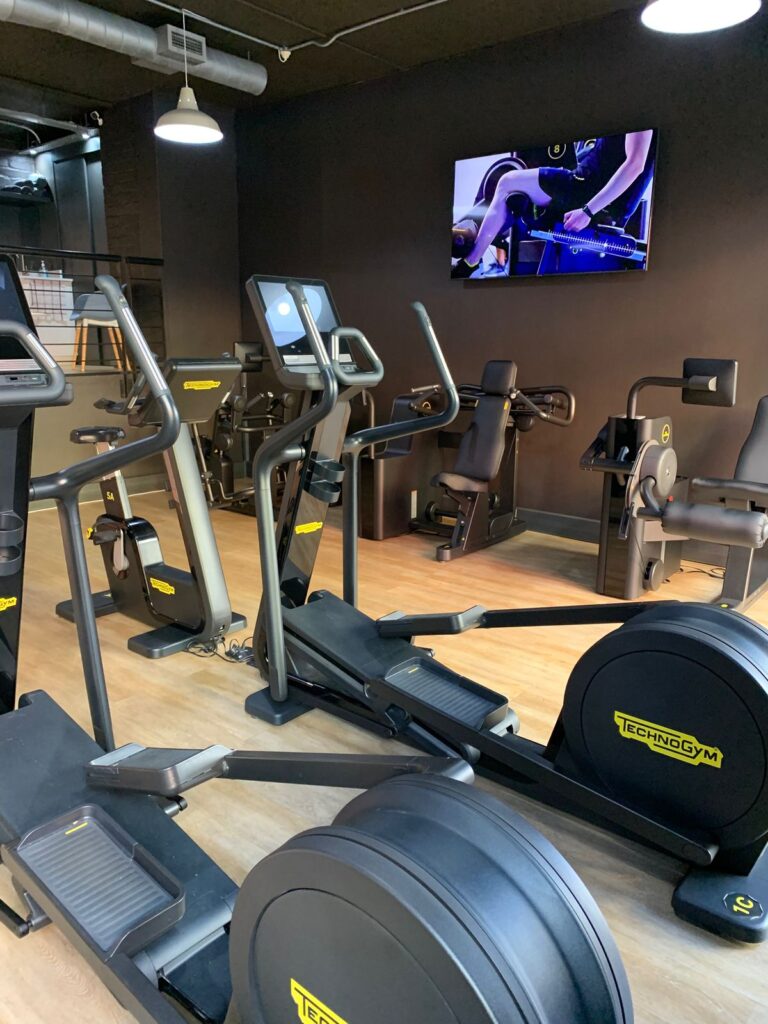
Threezero’s 30-minute sessions use Technogym’s Biocircuit system, which guides you through a sequence of resistance stations at the right load for you, kept at a pace that works your cardiovascular system as well as your muscles. Strength and engine, in half an hour, three times a week. The average member sees a 14% increase in strength over three months, and the format is deliberately built so those gains keep compounding rather than stalling.
If you want the bigger picture of why markers like these sit at the centre of how we think about training, our pillar post on healthspan versus lifespan is the place to start.
See your own numbers move
The most convincing version of any of this is watching your own strength go up week after week. Threezero is a Vitality Accredited Fitness centre at Cape Quarter in Green Point, and a trial session is the easiest way to feel what training for these two numbers is actually like.
Book a trial session at threezero
Threezero is a Vitality Accredited Fitness centre at Cape Quarter, 27 Somerset Road, Green Point, Cape Town.


