
AI has arrived in fitness the way it arrives everywhere, with a lot of noise and very little clarity about what is actually being automated.
So it is worth being precise. An AI-guided strength system and a personal trainer do overlapping but genuinely different jobs. Understanding which parts overlap tells you which one you need, and whether you need both.
What a personal trainer does
A good trainer does at least five distinct things:
- Assesses your movement and identifies limitations
- Designs a programme suited to your goals and history
- Corrects your technique in real time
- Adjusts the plan when life, injury or progress changes the picture
- Holds you accountable and keeps you going on the days you do not want to
The last two are the ones people underestimate. Most of the value in personal training is not the programme. It is the appointment in the diary and the person expecting you.
What an AI-guided system does
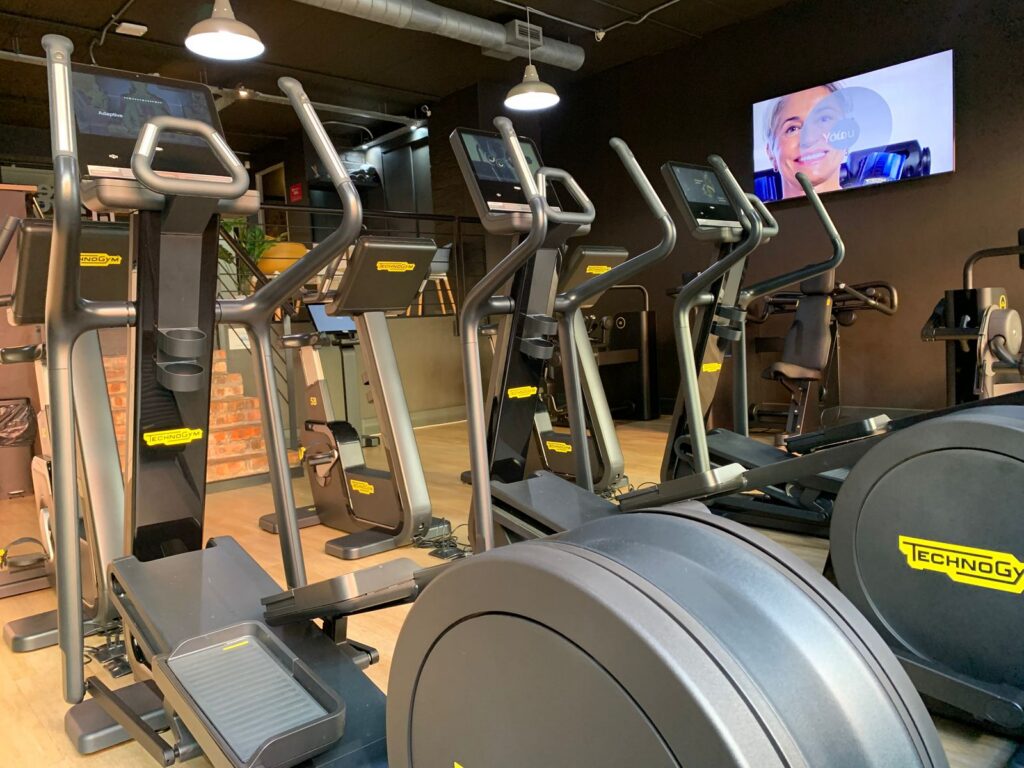
A guided strength system like the Technogym Biocircuit automates a narrower set of tasks, and does them with a consistency no human can match:
- Recognises you and loads your profile
- Adjusts each machine to your body measurements automatically
- Sets the resistance from your measured strength, not an estimate
- Controls tempo and range of motion through the movement
- Records every rep of every session
- Increases the load when your data says you are ready
Notice what that list is. It is the mechanical, repetitive and data-driven part of training. It is not coaching.
The real difference: judgement versus consistency
The honest framing is this. A trainer brings judgement. A guided system brings consistency.
Judgement is what you need when something is unusual. A shoulder that has started clicking, a goal that has changed, a plateau that needs a creative solution, a return from injury. No system handles that well, and anyone claiming otherwise is selling something.
Consistency is what you need for everything else, which is most of it. Setting the right load every single session. Never letting a machine sit two notches off where it should be. Never forgetting what you lifted six weeks ago. Never having an off day where the progression quietly stops.
Humans are excellent at judgement and unreliable at consistency. Machines are the reverse. That is the whole distinction.
The problem AI actually solves
The most useful thing about a guided system is not the technology. It is that it removes the two failure points that end most training programmes.
Failure point one: the load drifts down. Left to their own judgement, most people gradually train lighter. Not deliberately. It happens because the correct load is uncomfortable and self-selected load tracks how you feel rather than what you need. Six months in, someone is doing the same movements at the same weight and wondering why nothing is changing. A system that sets the resistance from data does not have moods.
Failure point two: the decision cost. Having to plan the session is a real barrier, particularly on a low-energy day. Removing the decision removes one of the main reasons people skip.
Both of those are consistency problems, which is precisely where automation has the advantage.
Where a guided system falls short
It will not read the room. It does not know you slept four hours, that your back has been complaining, or that you are training for something specific in eight weeks. It cannot redesign your programme because your circumstances changed.
It also does not provide the human relationship. For plenty of people, that relationship is the actual product they are buying, and no amount of automated load progression substitutes for someone who notices when you have not been in.
If you need technique rebuilt from scratch, are managing a complex injury, or are training for a specific competitive outcome, a coach is the right call.
Why threezero chose guided
Threezero is built around the Biocircuit because of who the studio is for. Our members are largely time-poor professionals over forty whose goal is strength, function and healthspan rather than sport performance.
For that person, the binding constraint is not knowledge and it is not technique. It is time and consistency. The guided circuit attacks exactly those two, and it does so at a price point that makes two or three sessions a week sustainable for years rather than months.
Average member result. 14% increase in strength over three months.
The reasoning behind the studio design is covered further in what longevity training actually means, and the case for prioritising strength at all is in strength training after 40.
How to choose
Ask what your actual bottleneck is.
If it is not knowing what to do, or having a specific problem that needs solving, hire a coach. If it is finding the time, staying consistent and making sure the load keeps climbing, a guided system is the more efficient answer and it costs considerably less per session.
Many people benefit from both at different stages. A few sessions with a coach to establish movement quality, then a guided system to carry the habit for the following decade, is a sensible sequence.
Threezero is a Vitality Accredited Fitness centre at Cape Quarter, Green Point.
Book a trial session and see how the guided circuit works in practice.


