
Somewhere around 40, a quiet change tends to arrive. Recovery takes a little longer. The body that used to bounce back from anything starts sending small signals. Most people read this as a sign to do less, to be more careful, to wind down.
That instinct is almost exactly backwards. Strength training after 40 is not something to ease off on. It is arguably the single most valuable thing you can do for your future health, and the case for it only gets stronger with every decade that follows.
What is quietly happening to your body after 40
From around your mid-30s, and accelerating after 40, you lose muscle mass each year unless you actively work against it. The clinical name for age-related muscle loss is sarcopenia, and it is one of the main drivers of the decline into frailty later in life.
It is easy to underestimate because it is so gradual. You do not feel a small annual loss of muscle. But it adds up relentlessly. The strength you lose quietly through your 40s, 50s and 60s is what eventually shows up as struggling to rise from a chair, a fear of falling, or losing the independence to do ordinary things. Alongside the muscle, bone density declines too, which is what turns an ordinary stumble at 75 into a serious break.
None of this is a reason for alarm. It is a reason to train, because every part of it responds to training.
Why strength training is the direct antidote
Resistance training does not slow this decline. It reverses large parts of it. When you challenge a muscle with meaningful load, it adapts and grows, and this is true well beyond 40. Studies of resistance training in people in their 60s, 70s and even 80s consistently show real gains in strength and muscle. The body does not lose the ability to build. It only loses it if you never ask.
The benefits reach well past the muscle itself:
- Metabolic health. Muscle helps regulate blood sugar, which matters enormously given how common type 2 diabetes becomes with age.
- Bone strength. Loading your skeleton through resistance training helps maintain bone density and lowers fracture risk.
- Balance and fall prevention. Strong legs and a strong core keep you stable, and avoiding a serious fall is one of the highest-value things you can do for your later years.
- Independence. All of it adds up to staying capable. Carrying, lifting, climbing, travelling, keeping up, without having to plan your life around what your body can no longer do.
This is why we treat strength as the foundation of training for a long, capable life. It sits right at the centre of the healthspan picture we lay out in why living longer is not the goal.
The mistakes that hold people back after 40
Two errors are common, and they pull in opposite directions.
The first is doing too little. Light weights lifted comfortably, never progressing, never really challenging the muscle. This feels like exercise but produces very little adaptation, because muscle only changes when it is genuinely asked to. Comfortable is not the same as effective.
The second is treating your 40-plus body like your 20-year-old one. Ignoring recovery, skipping proper warm-ups, and jumping straight into ego lifting is how people get hurt, and an injury is the fastest way to stop training altogether. The answer sits in the middle. Train with real intensity, progress steadily, and respect recovery and form. That combination is safe and highly effective at any age.
The other quiet problem: time
There is one more reason people over 40 struggle to train, and it has nothing to do with the body. It is the diary. This is peak career, peak family, peak everything. The idea of long gym sessions several times a week is unrealistic for most people, so they do nothing instead.
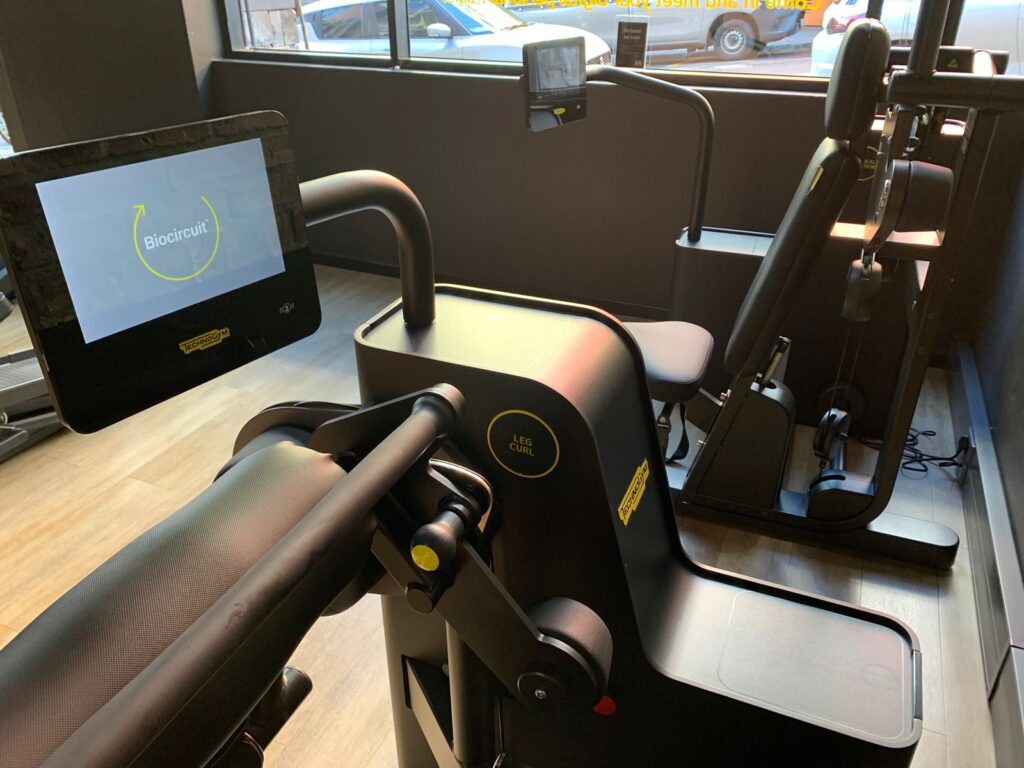
This is exactly the gap threezero was built to close. Thirty focused minutes, three times a week, is enough to drive real strength gains when the session is well designed. Threezero uses Technogym’s Biocircuit system, which sets the right resistance for you, guides you through the sequence, and tracks your progress, so every session counts and none of the time is wasted wandering a gym floor. The average member sees a 14% increase in strength over three months. For a busy professional over 40, a short, effective session you will actually keep doing beats a long one you abandon, every time.
It is not too late, and it will not be easier later
If there is one thing to take from this, it is that the trajectory is not fixed. The decline that people assume is just part of getting older is, to a large degree, a decline of disuse, and disuse is reversible. Starting strength training in your 40s, 50s or 60s genuinely changes the shape of the decades ahead of you.
The best time to start was years ago. The second best time is now, and it only gets harder to begin the longer it waits. Threezero is a Vitality Accredited Fitness centre at Cape Quarter in Green Point, and a trial session is the simplest way to start.
Book a trial session at threezero
Threezero is a Vitality Accredited Fitness centre at Cape Quarter, 27 Somerset Road, Green Point, Cape Town.


Pingback: Personal Trainer vs AI-Guided Strength Training: What Is the Difference? - Threezero