
The most common reason people give for not training is time. It is also, on inspection, almost never the real reason.
The average gym session is not ninety minutes of work. It is thirty to forty minutes of work spread across ninety minutes of deciding what to do, waiting for equipment, adjusting machines, checking a phone between sets and walking from one side of the floor to the other.
Strip that out and the actual training requirement is far smaller than most people believe. The question is what has to be true for thirty minutes to be enough.
What the research supports
Two findings do most of the work here.
Most of the benefit comes from the first few hard sets. The relationship between training volume and strength gain is not linear. The early sets of an exercise deliver the majority of the adaptive signal, and each additional set delivers progressively less. Doubling your time in the gym does not double your results, and for most people who are not competitive athletes it barely moves them.
Frequency and consistency beat session length. Two or three sessions a week, sustained for years, produces better long-term outcomes than longer sessions done sporadically. The variable that predicts results at the two-year mark is how many sessions you actually completed, not how long each one was.
Put those together and a well-designed thirty-minute session, done consistently, outperforms a ninety-minute session done when you can face it.
The three conditions
Thirty minutes is only enough if three things are true.
1. There is no decision-making inside the session. Deciding what to do next is the largest hidden time cost in a normal workout, and it is also a source of drift. When you choose in the moment, you choose what you feel like, which is rarely what you need. The session has to be determined before you walk in.
2. The load is right and it progresses. A short session with too little resistance is a warm-up. Muscle adapts to load, and once it has adapted it stops responding unless the load increases. Progression is not optional, it is the mechanism.
3. There is minimal transition time. Moving between stations, adjusting seat heights and changing weight plates can eat ten minutes of a thirty-minute window. Removing that friction is what makes the maths work.
Hit all three and thirty minutes is genuinely sufficient for the strength and metabolic outcomes that matter. Miss any one and it is not.
How the Biocircuit meets all three
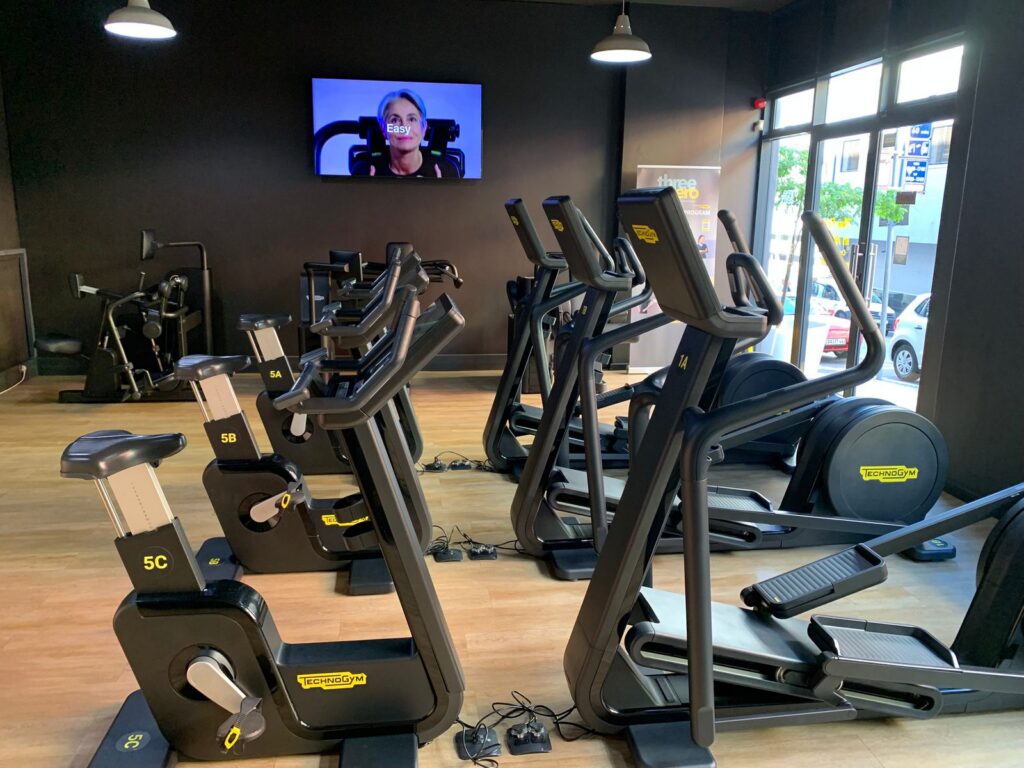
The Technogym Biocircuit at our Green Point studio was designed around exactly this problem.
You are recognised when you arrive at the first station. The machine adjusts to your body automatically, so seat and arm positions are set correctly without you working them out. The resistance is set from your current strength profile, not a guess. When the set is done, the circuit moves you to the next station and the next machine is already configured.
The result is a full-body strength circuit covering the major movement patterns in thirty minutes, with no planning, no queuing and no equipment fiddling. The load increases as you get stronger, automatically, which handles the progression requirement without you having to track anything.
Average member result. 14% increase in strength over three months.
What a session actually looks like
You arrive. You start the circuit. You work through the stations in sequence, each one already set for you, with guided timing that tells you when to work and when to move. Thirty minutes later you are done.
There is no floor to navigate, no programme to remember and no negotiation with yourself about what to do today. That last point is underrated. The mental cost of deciding is a large part of why people skip sessions, and removing it changes the odds that you show up on a bad week.
If you want the fuller background on why the studio is built this way rather than as a conventional gym, what longevity training actually means covers the reasoning.
Who this suits, and who it does not
It suits people with a fixed and limited amount of time, people who want the decisions made for them, people returning to training after a long gap, and people over forty whose priority is strength and function rather than sport-specific performance.
It is not designed for someone training for a powerlifting meet or building a physique for stage. Those goals need specialised volume and periodisation that no thirty-minute circuit will provide. That is a different job and we would say so.
For the large majority of people whose actual goal is to be strong, capable and metabolically healthy for the next thirty years, this is the efficient route.
The honest trade-off
A guided circuit gives up some flexibility. You are not choosing your own exercises or chasing a specific lift. What you get in exchange is a session you will actually complete, at the right load, without thinking about it, twice a week, for years.
That trade is a good one for most people, because the programme you follow beats the better programme you abandon.
Try the thirty minutes
The best way to judge whether thirty minutes is enough is to do one and see how you feel the next day.
Threezero is a Vitality Accredited Fitness centre at Cape Quarter, 27 Somerset Road, Green Point.
Book a trial session and find out what thirty focused minutes actually does.


